


First Aid for Tradies: The Most Common Workplace Injuries and What to Do


When you work with your hands, injuries are part of the risk.
A cut from a grinder. A burn from welding. Something falling from above. A chemical splash. A twisted ankle on a construction site. A serious injury involving machinery.
For tradies, construction workers, mechanics, labourers and other hands-on workers, knowing basic first aid isn't just another box to tick for work.
It is a practical skill that could be needed at any time.
In Wollongong and across the Illawarra, there is a huge range of hands-on industries where workers are exposed to different hazards every day. From construction sites and workshops to warehouses, manufacturing, landscaping and maintenance work, the right first aid response can be critical while waiting for further medical assistance.
So, what injuries should tradies be prepared for?
Cuts and serious bleeding
Cuts are one of the injuries most people associate with workplace first aid.
But there is a big difference between a small cut that needs a plaster and a wound that is causing significant blood loss.
Tradies can be exposed to sharp tools, sheet metal, glass, grinders, saws, drills and machinery.
For serious bleeding, the priority is to control the bleeding as quickly as possible.
Apply firm, direct pressure to the wound using an appropriate dressing or clean material.
For life-threatening bleeding, a tourniquet may be required depending on the injury and circumstances.
This is why a workplace first aid kit needs to contain equipment appropriate to the actual hazards present, rather than simply being a box of band-aids.
Burns
Welding, cutting, soldering, hot machinery, chemicals and electrical equipment can all create burn hazards.
Burns can range from relatively minor injuries through to serious burns requiring urgent medical treatment.
For a thermal burn, cool running water is an important first aid treatment.
Cool the burn with cool running water for 20 minutes where possible.
Do not put ice directly onto a burn and avoid home remedies such as butter or toothpaste.
For large, deep or extensive burns, seek urgent medical assistance.
If you work in an environment where burns are a foreseeable risk, your workplace first aid kit should be appropriate for those hazards.
Eye injuries
Your eyes can be particularly vulnerable in workshops and on construction sites.
Dust, metal fragments, wood particles, chemicals and debris can all cause eye injuries.
Grinding and cutting are particularly important examples where appropriate eye protection is essential.
If something gets into the eye, avoid rubbing it.
If a chemical enters the eye, begin flushing it with clean running water and seek medical advice.
A high-speed fragment striking the eye can cause significant injury, even if the damage isn't immediately obvious.
Good first aid starts with recognising when an apparently minor eye injury may actually require medical assessment.
Crush and machinery injuries
Machinery can cause some of the most serious workplace injuries.
Workers may become trapped, crushed or caught in moving parts of machinery, vehicles or equipment.
If someone is trapped in machinery, don't rush in and become the second casualty.
The first priority is scene safety.
Where possible, stop or isolate the machinery without putting yourself at risk.
Call 000 for serious injuries or entrapment and follow the instructions of emergency services.
Once the scene is safe, first aid priorities will depend on the injuries involved.
This could include managing catastrophic bleeding, supporting breathing, treating shock and monitoring the injured person until emergency services arrive.
Falls and fractures
Construction and maintenance work can involve ladders, scaffolding, roofs, elevated work platforms, stairs and uneven surfaces.
A fall can result in anything from a sprain to a serious head, spinal or internal injury.
Signs of a possible fracture can include:
Pain
Swelling
Bruising
Deformity
Loss of normal movement
Inability to use the affected body part
Don't try to straighten an obviously deformed limb.
Keep the person as comfortable and still as possible and arrange appropriate medical assessment.
With significant falls, the mechanism of injury is important. A worker who has fallen from height may have injuries that aren't immediately obvious.
Head injuries and concussion
A head injury doesn't always look dramatic.
Someone may remain conscious and continue talking after an impact while still having a significant head injury.
Symptoms of concussion can include:
Headache
Dizziness
Nausea
Confusion
Problems with memory
Difficulty concentrating
Visual disturbances
Balance problems
Unusual behaviour
Drowsiness
If a worker sustains a significant head injury, they should be removed from the activity and appropriately assessed.
Don't rely on someone simply saying, "I'm fine."
If there are signs of a serious head injury or deterioration, call 000.
Chemical exposure
Many workplaces use chemicals every day.
This could include cleaning products, solvents, fuels, paints, adhesives, agricultural chemicals or industrial substances.
Chemical exposure can occur through the skin, eyes, inhalation or ingestion.
If someone is exposed to a chemical, remove them from the source if it is safe to do so and follow the relevant safety information for the substance.
For poisoning or suspected poisoning in Australia, the Poisons Information Centre can be contacted on 13 11 26.
If the person is seriously unwell, unconscious, having difficulty breathing or having a seizure, call 000.
Knowing where your workplace Safety Data Sheets are kept can also make a significant difference when dealing with a chemical exposure.
Electrical injuries
Electricity can cause serious injuries without leaving obvious external damage.
Electric shock can result in burns, falls, cardiac problems and other internal injuries.
The most important rule is simple:
Don't touch someone who may still be in contact with an electrical source.
Make sure the electrical source has been isolated before approaching the casualty, if this can be done safely.
Once the scene is safe, assess the person and provide appropriate first aid.
Call 000 for serious electrical injuries or where the person is unresponsive, having difficulty breathing or otherwise seriously unwell.
Sprains, strains and musculoskeletal injuries
Not every workplace injury involves blood or an ambulance.
Tradies and other physical workers regularly deal with strains, sprains and other musculoskeletal injuries.
Lifting, carrying, climbing, repetitive movements and awkward positions can all contribute to workplace injuries.
While these injuries may not require an ambulance, knowing how to assess the situation and provide appropriate first aid can still help the worker recover safely and determine whether further medical assessment is required.
Heat illness
Working outdoors or in hot environments can create another set of risks.
Construction sites, roofing, landscaping, roadwork and other physically demanding jobs can become particularly challenging during hot weather.
Early signs of heat-related illness can include:
Headache
Dizziness
Weakness
Nausea
Excessive sweating
Thirst
Feeling faint
More serious heat illness can involve confusion, altered behaviour, seizures or collapse.
If someone is seriously affected by heat, treat it as an emergency.
Move them to a cooler environment where safe, begin cooling measures and call 000 when there are signs of severe heat illness.
What makes good workplace first aid?
Having a first aid kit is important.
But a first aid kit on its own doesn't make a workplace prepared for an emergency.
Safe Work Australia recommends that workplaces consider their hazards, workplace size and location when determining their first aid needs. The number and type of workers, contractors, visitors and the nature of the work also need to be considered.
That means the first aid arrangements for an office in Wollongong CBD aren't necessarily going to be the same as those for a construction site, workshop or manufacturing facility.
A good workplace first aid plan should consider:
What injuries are realistically likely to occur?
Where is the first aid kit located?
Can workers access it quickly?
Who are the trained first aiders?
How will someone call for an ambulance?
Can emergency services easily find the workplace?
What happens if an injury occurs outside normal working hours?
Does the workplace have an emergency plan?
Are workers trained to respond to the hazards specific to their job?
Safe Work Australia states that workplaces must provide access to first aid equipment, facilities and trained first aiders, with arrangements determined by the needs and risks of the workplace.
Why practical first aid training matters
There is a big difference between knowing the theory of first aid and being comfortable providing first aid when something has actually gone wrong.
Imagine you're on a construction site and someone has a serious laceration.
Or you're in a workshop when a worker gets something in their eye.
Or someone falls from a ladder and is confused afterwards.
In those moments, you don't have time to search Google for what to do.
You need to recognise the emergency, make the scene safe and know what to do next.
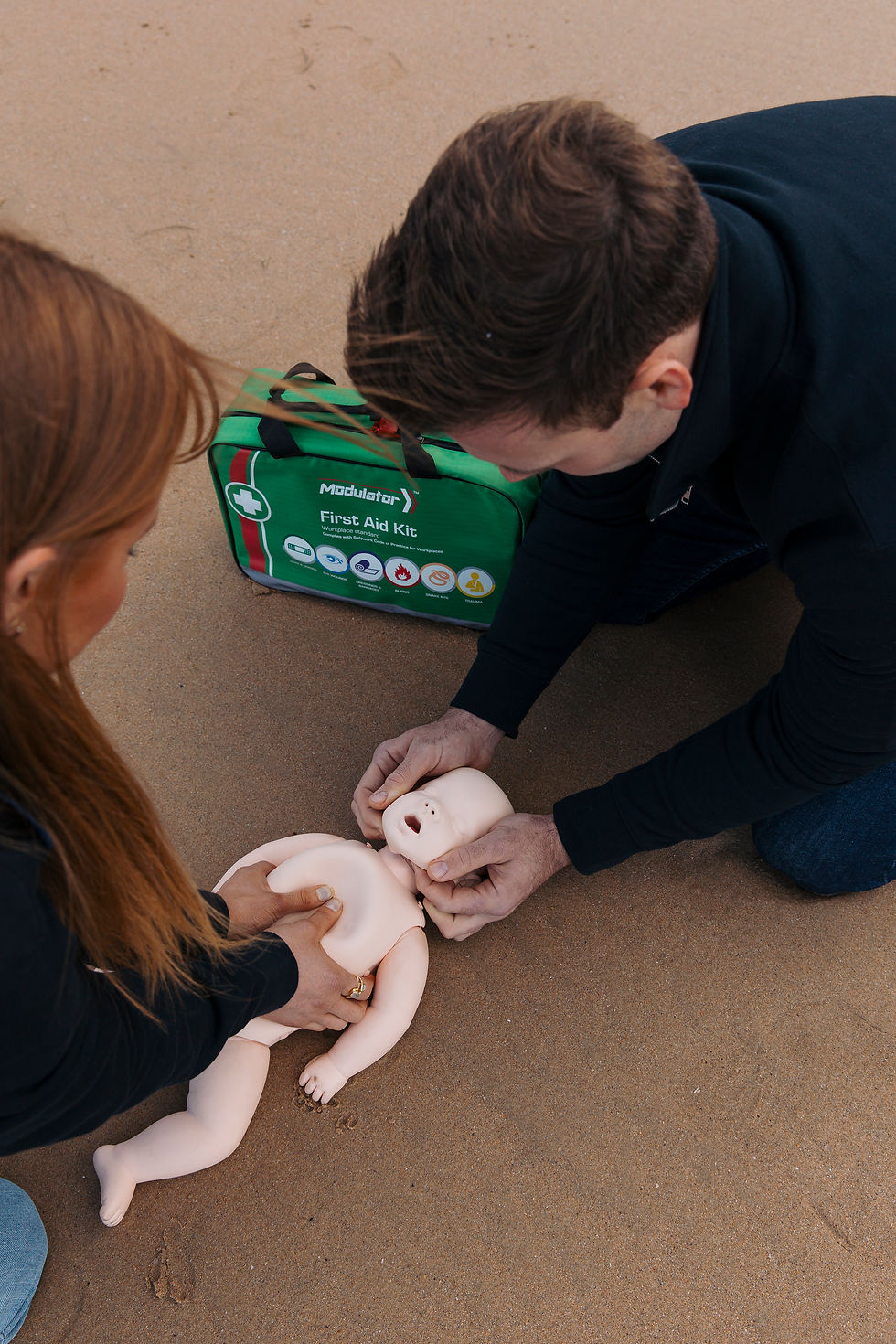
That's why practical first aid training matters.
At Central West First Aid Training Specialists, our training is delivered by experienced frontline paramedics who understand that workplace emergencies don't always look like the neat scenarios in a textbook.
First aid training in Wollongong and the Illawarra
If you're looking for first aid training in Wollongong, your training should be relevant to the work your people actually do.
Whether you're a construction company, trade business, manufacturing operation, warehouse, school, community organisation or another workplace, your first aid needs should reflect your environment.
Central West First Aid Training Specialists provides practical, evidence-based first aid training for workplaces across Wollongong, the Illawarra and surrounding areas.
Our courses can be delivered in a practical environment with scenarios designed around the types of emergencies your workers could realistically encounter.
Because first aid isn't about memorising a checklist.
It's about knowing what to do when something goes wrong.
Is your workplace ready?
Take a few minutes to think about your workplace.
If someone sustained a serious injury tomorrow:
Would everyone know who the first aider is?
Would they know where the first aid kit is?
Would they know when to call 000?
Would they know what to do while waiting for the ambulance?
If the answer to any of these questions is "I'm not sure", it may be time to review your workplace first aid arrangements.
Central West First Aid Training Specialists provides first aid courses in Wollongong and across the Illawarra, including nationally recognised workplace first aid and CPR training.
Get in touch with our team to discuss first aid training for your workplace.


Comments